
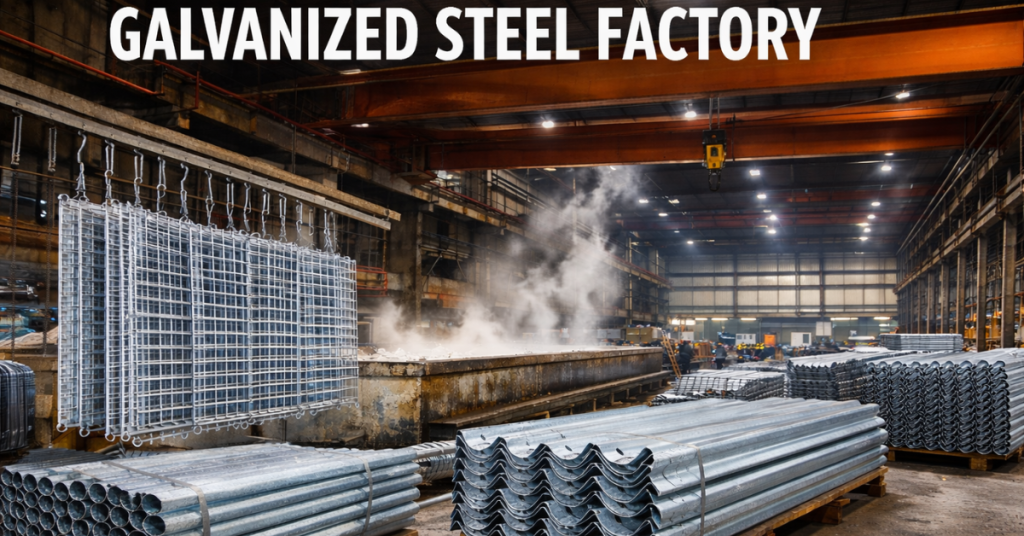
Engineers carry great responsibility when businesses select a steel partner. They never guess or assume. Instead, they explore, examine, measure, and confirm every detail before placing trust in a supplier. When choosing a galvanized steel factory, engineers look far beyond simple price sheets or sales talk. They investigate production strength, coating quality, safety systems, and delivery reliability with careful focus. Companies that depend on durable materials require clear proof of performance. Strong steel protects buildings, bridges, factories, and heavy structures for many years. This article explains how engineers assess the capabilities of a factory that produces hot dip galvanized steel, especially when working with reputable suppliers such as VG Steel Industries Sdn Bhd.
Understanding the Production Setup
Engineers begin their evaluation by walking through the entire production area. They observe how raw steel enters the line and follow its journey until finished products leave the facility.
They closely inspect:
- The size and stability of galvanising kettles
- Temperature control systems
- Cleaning and pickling tanks
- Cooling and finishing sections
A capable galvanized steel plant maintains steady heat during the galvanising process. Engineers measure whether the molten zinc holds a constant temperature. Even small temperature shifts can weaken coating quality.
They also review digital monitoring systems that record coating weight, dipping speed, and zinc usage. Modern equipment captures accurate data and helps engineers confirm consistent results. When machinery operates smoothly and staff manage systems confidently, engineers recognise strong operational control.
Inspecting the Hot Dip Galvanizing Process
Engineers then focus on how the plant performs the hot dip galvanized steel process. Each stage must flow smoothly and follow strict standards.
The process includes:
- Surface cleaning
- Pickling to remove rust
- Flux treatment
- Immersion in molten zinc
- Cooling and final inspection
Engineers inspect the entire cleaning operation that workers perform before they drop steel into the dipping process. Dirt, grease, and rust prevent zinc from forming a proper bond. The team assesses the whole process while monitoring whether the steel remains in molten zinc for the proper duration.
They use thickness gauges to measure the thickness of the final zinc layer. Consistent dipping speed and controlled bath chemistry help maintain uniform coating strength.
Testing Coating Thickness and Durability
Engineers do not rely only on appearance. They conduct thorough tests to confirm strength and long term protection.
They perform:
- Coating thickness measurements
- Adhesion testing
- Salt spray corrosion testing
- Bend testing
Engineers compare results with recognised international standards. When the factory meets or surpasses these requirements, buyers gain confidence in durability and performance.
Reviewing Quality Control Systems
Clear systems build trust. Engineers carefully review whether the galvanized steel factory follows structured quality procedures.
They examine:
- Inspection records
- Batch tracking systems
- Material certificates
- Internal audit documents
Factories that record every stage of production demonstrate discipline and transparency. Engineers appreciate suppliers who trace each batch from raw steel to final dispatch.
The staff members remain under observation as they work to identify and resolve defects that arise during their duties. The identification process for factories that maintain high operational levels enables them to detect problems at their inception and work toward immediate resolution.
Evaluating Production Capacity and Lead Time
In B2B operations, timing shapes success. Engineers assess whether the factory can manage large orders while maintaining quality.
They review:
- Monthly production capacity
- Storage facilities
- Dispatch systems
- Supply chain coordination
Checking Compliance and Safety Standards
Engineers also prioritise safety and environmental responsibility. They inspect whether the factory operates within strict regulatory frameworks.
They assess:
- Environmental control systems
- Waste management procedures
- Worker safety protocols
- Compliance certifications
Compliance certificates provide further assurance that the factory aligns with recognised industry regulations.
Assessing Technical Support and Industry Experience
Machinery alone does not guarantee excellence. Engineers evaluate knowledge and expertise within the organisation.
They review:
- Years of operational experience
- Completed project portfolios
- Technical consultation services
- Custom fabrication capabilities
Analysing Cost Efficiency Without Sacrificing Quality
Engineers focus on determining the full value of products to identify the most cost-effective options. The process of high-quality galvanizing produces products that require less maintenance while their durability increases.
They analyse:
- Zinc consumption efficiency
- Energy management systems
- Waste reduction practices
- Warranty support
A capable galvanized steel factory balances operational efficiency with superior coating performance. Strong zinc bonding reduces repair needs and protects large scale investments for many years.
Conclusion
Engineers approach supplier evaluation with discipline and careful judgement. They explore production systems, scrutinise coating quality, verify compliance standards, and confirm delivery capacity. Every step helps them determine whether a factory can provide reliable and durable steel solutions. A professional galvanized steel factory demonstrates consistency, transparency, and technical strength. Trusted suppliers such as VG Steel Industries Sdn Bhd showcase structured processes and strong quality control that support long term industrial success. When engineers complete their evaluation, businesses gain assurance that their chosen hot dip galvanized steel partner will protect projects with strength, stability, and lasting performance.